Revista de Comunicación de la SEECI (2026).
ISSN: 1576-3420
|
Received: Apr 1, 2025 --- Accepted: Aug 20, 2025 --- Published: Sep 8, 2025 |
ANALYSIS OF INCLUSIVE LANGUAGE IN THE SPORTS PRESS IN SPAIN FROM A GENDER PERSPECTIVE: THE PARIS OLYMPIC GAMES
 María Luisa Fanjul Fernández: European University of Madrid. Spain.
marialuisa.fanjul@universidadeuropea.es
Francisco José Pradana Pérez: European University of Madrid. Spain.
franciscojose.pradana@universidadeuropea.es
José Jesús Vargas Delgado: European University of Madrid, Spain.
jjesus.vargas@universidadeuropea.es
How to cite the article:
Fanjul Fernández, María Luisa; Pradana Pérez, Francisco José & Vargas Delgado, José Jesús (2026). Analysis of inclusive language in the sports press in Spain from a gender perspective: The Paris Olympic Games. Revista de Comunicación de la SEECI, 59, 1-24. https://doi.org/10.15198/seeci.2026.59.e922
ABSTRACT
Introduction: This article addresses the persistence of non-inclusive language and gender stereotypes in Spanish sports press coverage of the 2024 Paris Olympic Games. Despite advances in gender equality and the increased visibility of women in sports, the media continues to play down women's athletic achievements and use stereotypical narratives. Methodology: This study employs a combination of quantitative and qualitative analyses of 76 front pages from major Spanish sports newspapers, including Marca, AS, Mundo Deportivo, and Sport, during the Olympic period. The variables of interest include prioritization of news and use of inclusive language, with a focus on categories such as headlines, subheadings, and main text. Results: Qualitative analysis revealed the more frequent use of stereotypical expressions for women's achievements, such as "miracle" and "historic", compared to terms like "overcomes" and "great", which are used in men's sports. Furthermore, instances of the unnecessary highlighting and marginalization of gender were detected. Discussion: Although steps have been taken toward more equitable representation, the results indicate that female athletes continue to be presented through narratives that reinforce traditional gender roles. These practices highlight the necessity of a cultural and linguistic transformation in sports journalism. Conclusions: In order to advance gender equality in sports, the media must adopt inclusive language and narrative approaches that are free of stereotypes and that fairly recognize the achievements of male and female athletes alike. This will strengthen the perception of equality in society.
Keywords: communication, sport, stereotype, inclusive language, media.
1. INTRODUCTION
Traditionally, the media has acted as an agent of socialization, establishing topics for public debate and shaping collective perceptions, even in the digital age (Antúnez, 2020; Lazo Serrano et al., 2022; Ribeiro et al., 2024). They contribute to the construction and reinforcement of images of social reality (Farfán & Requena, 2024) by visibly expressing the values and culture of each social group, as well as society as a whole. Thus, different media platforms position themselves as potential instruments of social control (Cruz Vilain, 2021), operating through the integration of norms, the use of symbols, and roles already internalized by audiences (Baum & Potter, 2008; Villa Gil, 2013).
Specifically, the media perpetuate gender stereotypes and roles by constantly and systematically transmitting these representations, which the public perceives as objective, unquestionable, and permanent (Gerardo, 2020; Tovar Lasheras et al., 2020).
Along these lines, the sports press is identified as a predominantly male space that prioritizes sports performed by men (Salido-Fernández & Muñoz-Muñoz, 2021). It exerts a special influence on consolidating cultural values that perpetuate recurring, stereotypical gender attitudes (Pfister, 2015). For example, male sports stereotypes are related to athletes' physical qualities, while female stereotypes fundamentally value athletes' beauty (Pérez-Ugena, 2020).
In this regard, it should be noted that although there has been an evolution towards accepting women in sports in recent years, there is still resistance under the premise that some sports are valid for women and others for men (Casajús & Berdula, 2021; Méndez Sánchez et al., 2023).
Under this premise, studies such as that of Jesus Bento et al. (2020) demonstrate that women's participation in sports has been limited and constructed based on gender stereotypes. Consequently, the practice of sports requiring attributes perceived as masculine tends to be considered a male domain, resulting in an unequal distribution of male and female participation.
In this sense, although more and more women are practicing elite sports, the increase in their sporting achievements has been exponential in recent decades (Statistics and Studies Division of the General Technical Secretariat and Higher Sports Council, 2022). However, they are still not very visible in the sports press. Significant differences in media coverage of male and female sports perpetuate gender roles, incorporating beauty, motherhood, and the sexualization of female athletes (Mujika-Alberdi et al., 2021).
Thus, the continued dominance of this approach in sports journalism limits the recognition and visibility of female athletes, reducing the potential impact of women's sports on gender equality (Rodríguez Torres et al., 2022).
The importance of reformulating this approach is widely recognized in current literature, which emphasizes the need to challenge gender stereotypes in sports media, public organizations, and private companies to equitably reflect the role of women in sports (Donoso Pérez et al., 2023; Menéndez Menéndez, 2020).
This challenge has led to a growing demand for research proposing more inclusive coverage models and measures (Ramon Vegas et al., 2020). Even though some media have adopted egalitarian models, the evolution is slow and uneven. This reinforces the idea that women are less interested in sports than men and perpetuates the notion of female inferiority (Galván Cárdenas, 2022).
1.1. The role of journalistic language in perpetuating gender rolesroles
In this context, the role of journalistic language in perpetuating gender roles remains a critical issue in media coverage analysis. Through its linguistic choices, journalistic language contributes to the recovery and consolidation of stereotypes affecting public perception of women's and men's roles in society (Ross & Padovani, 2020).
Similarly, Calvo-Ortega (2020) analyzed print and digital media coverage and concluded that women are often presented in terms of their physical appearance or family roles. This limits their perception as figures of power and professionalism. Conversely, men tend to be described in relation to their achievements, authority, and competence, thus reinforcing traditional gender roles that associate leadership and rationality with the male gender.
For their part, and referring to the sports press, several authors such as Fanjul Fernández (2020) observed how the terms used to refer to women focus on aesthetic or personality traits, instead of using language that values their achievements and skills in the same terms as the achievements of men, promoting a more equitable vision and contributing to an equal perception in media coverage (Galván Cárdenas, 2022).
To this end, an inclusive language approach in the sports press would involve not only explicitly referring to female athletes with specific terms, but also avoiding the use of qualifiers that emphasize physical or aesthetic attributes over their sporting abilities (Roca Marín & Navarro García, 2022).
From this perspective, organizations such as the UN and UNESCO have developed guidelines for the media, promoting the use of language that avoids bias and fosters gender equality in all areas, including sports, recommending practices such as avoiding the unnecessary feminization of professions or positions, using inclusive pronouns when possible, and highlighting sporting achievements without gender connotations (United Nations Educational, Scientific and Cultural Organization [UNESCO], 1999).
As a result of the preceding discussion, this research establishes the following premise: current sports media coverage in specialized newspapers perpetuates gender stereotypes through journalistic language.
To address the first issue, the following variables are considered:
- Printed sports newspapers.
- The most read sports newspapers in Spain.
- Front pages prioritized over chronicles.
- Hierarchy of information on front pages.
Regarding the first variable, multiple platforms exist for consuming sports content (Boyle & Haynes, 2014); however, print media continues to play an essential role in shaping and disseminating sports information to the general public. Despite digital expansion, the press maintains its influence and stands out for its ability to establish narratives and informative approaches with high social impact (Hutchins & Rowe, 2016).
According to recent data from Estudio General de Medios[1] (EGM) published by the Asociación para la Investigación de Medios de Comunicación [2] (AIMC, 2024), a total of 5,645,000 newspaper readers were recorded during the second wave of 2024, which corresponded to the period between March 20 and June 4 of that year. Of those, 1,536,000 were sports newspaper readers.
Regarding the second variable, the sample focuses on analyzing the most widely read sports newspapers in Spain: Marca, AS, Mundo Deportivo, and Sport. These publications were selected based on the premise that the media significantly influences the Spanish population as consumers of information. Consequently, the primary selection criterion for this research was the daily readership of each publication. The data show a clear hierarchy in terms of reach: Marca tops the list with 950,000 daily readers, followed by AS with 506,000 readers, Mundo Deportivo with 253,000 readers, and Sport with 230,000 readers (AIMC, 2024).
Regarding the third variable, front pages are considered the initial point of contact between readers and newspapers, serving as publications' introductions (Weinberg, 2022). Recent studies show that the front page remains fundamental in terms of reach and social influence. It is one of the press's main resources for impacting its audience (Pérez Serrano & García Santamaría, 2018). Front pages also shape the agenda of other media outlets, such as television (Aruguete, 2017).
Additionally, front pages are often read not only by newspaper subscribers, but also by a wider audience who read only the first page. Their function extends beyond informing; they aim to capture the reader's attention through visual and narrative strategies that generate surprise (Sánchez Vigil et al., 2022; Suárez Ramírez et al., 2018).
Finally, to address the fourth variable, the components of the analyzed front pages were considered. The objective was to determine when women's sports, athletes, and their achievements were featured as main news, highlighted news, or included in the news summary. The collected information was then categorized as follows: headline, subheadline, and body text.
To address the second issue, it is evident that the 2024 Olympic Games in Paris have marked a turning point in the media's coverage of female athletes. These games achieved significant progress in visibility and inclusion, reaching gender parity with an equal number of male and female participants. This is the first time in Olympic history that this milestone has been achieved (ONU Mujeres[3], 2024).
The Comité Olímpico Internacional[4] (COI) supported this progress by issuing new guidelines for fair and balanced media representation. The COI urged broadcasters to highlight athletic achievements over appearance or other personal details (COI, 2024). This reflects a broader cultural shift in which the public increasingly celebrates female athletic achievements. This shift has had a positive effect on sponsorships and investments that support the global development of women's sports (Streem, 2025).
In any case, it is clear that the Olympic Games have become a key platform for raising the profile of women's sports. For example, at the 2008 Beijing Olympics, the media spotlighted female athletes like American swimmer Dara Torres and Jamaican sprinter Shelly-Ann Fraser-Pryce, who received extensive coverage for their historic achievements. The media also emphasized these athletes' exceptional records and skills, and there was a trend toward decreasing the focus on stereotypical aspects and concentrating more on their sporting accomplishments (Bruce, 2009).
Similarly, NBC's coverage of the London 2012 Olympic Games (Jones, 2013; Billings et al., 2014) devoted significant space to female athletes. During the Rio 2016 Olympic Games, NBC's primetime programming devoted more than half of its broadcast time —specifically, 58.5%— to female athletes (UDaily, 2016).
In March 2020, it was no coincidence that the COI made the momentous decision to require each Olympic delegation to include at least one woman and one man. Consequently, the Tokyo 2020 Olympic Games, held in August 2021, marked a historic milestone as the first to feature women competing in every discipline (COI, 2021). However, female participation had already reached a significant milestone at the Rio 2016 Olympic Games: 5,059 female athletes competed, representing 45% of the total participants. This progress was reflected in both numbers and the diversity of disciplines, as women were included in sports such as golf and rugby for the first time. Furthermore, for the first time in Olympic history, all participating countries had at least one female athlete in their delegations (Salido-Fernández & Muñoz-Muñoz, 2021).
2. OBJECTIVES
Based on the arguments presented, the article's main objective is to determine if biases and inequalities in sports journalism perpetuate gender stereotypes and feminize sports. Reaching this objective will also allow for the achievement of the following specific objectives:
- To analyze whether the sports press contributes to the perpetuation of gender stereotypes.
- To study whether the language used in sports newspapers reinforces inclusive language use.
- To explore situations in which sports newspapers feminize or masculinize sports by making the gender of the athlete visible.
3. METHODOLOGY
This work is structured around an empirical study combining quantitative and qualitative content analyses. First, a quantitative analysis was conducted to determine the volume of information and categorize the type of content related to women's and men's sports in the sports press to explain the asymmetrical situation. Second, a qualitative analysis was conducted to further examine the media coverage of women's sports printed in newspapers by studying the language used.
3.1. The role of journalistic language in perpetuating gender roles
3.1.1. Sample selection
The selected sample is not intended to be a scalable representation of the given media coverage but rather a selection of a specific topic. In this context, the sample includes an analysis of 72 front pages from the print editions of the sports newspapers Marca, AS, Mundo Deportivo, and Sport, covering the official period of the Paris 2024 Olympic Games from July 26 to August 11, 2024.
Additionally, the front pages from July 24 and 25 are included because several competitions were scheduled before the start date. The basic criterion for selecting the front pages is the evolution of the teams and athletes up to the achievement of medals. Competitions that did not result in an Olympic medal for the Spanish delegation were excluded, except for the men's singles tennis category, which marked Rafael Nadal's retirement from professional tennis; Carolina Marín's injury, which forced her to withdraw from the badminton semifinals of the Olympic Games; and the participation of the men's basketball team, due to the significant media attention generated by the announcement of captain Rudy Fernández's retirement (table 1).
Table 1.
Sample Selection: Olympic Medals.
|
Olympic discipline |
Medal |
Selection |
|
Waterpolo |
Gold |
Female: team. |
|
Athletics (20 km walk) |
Silver |
Female: Maria Perez. |
|
Basketball (3X3) |
Silver |
Female: team. |
|
Artistic Swimming |
Bronze |
Female: team. |
|
Tennis (Doubles) |
Bronze |
Female: team. |
|
Mixed Relay |
Gold |
Mixed: Álvaro Martín and María Pérez. |
|
Soccer |
Gold |
Male: team. |
|
Sailing |
Gold |
Male: team. |
|
Athletics (Triple Jump) |
Gold |
Male: Jordan Díaz. |
|
Tennis |
Silver |
Male: Carlos Alcaraz. |
|
Boxing (+92 kg) |
Silver |
Male: Ayoub Ghadfa. |
|
Judo |
Bronze |
Male: Fran Garrigós. |
|
Canoeing |
Bronze |
Male: Pau Echaniz. |
|
Canoeing (C2 500) |
Bronze |
Male: team. |
|
Canoeing (K4 500) |
Bronze |
Male: team. |
|
Athletics (20 km walk) |
Bronze |
Male: Álvaro Martín |
|
Handball |
Bronze |
Male: team. |
|
Boxing (-92 kg) |
Bronze |
Male: Emmanuel Reyes Pla. |
|
Men's tennis (singles) |
No medal |
Male: Rafael Nadal |
|
Badminton |
No medal |
Female: Carolina Marín |
|
Basketball |
No medal |
Male: team |
Source: Elaborated by the authors, 2024.
3.2. Stages of the analysis plan: quantitative and qualitative approach to the research
The stages of the analysis plan are specified below.
3.2.1. Quantitative analysis plan
The quantitative analysis plan includes collecting data on the hierarchical organization of information on the front page. The systematization of data collection involved creating an analysis sheet that identified the newspaper's name and classified the content into the following subcategories: main news story, featured news story, and summary of featured news stories, taking into account the gender of the athletes (female/male), both for individual and team sports.
3.2.2. Quantitative analysis plan
The stages followed in the execution of the qualitative analysis plan (Saldaña, 2009) are the following:
- Document preparation and management. This stage involved the collection of front pages relevant to the analysis. A comprehensive internet search was conducted, primarily utilizing the digital archives of the newspapers under scrutiny.
- Raw data reduction. Data reduction entailed the extraction of the headlines from each front page that were pertinent to the research objectives. This process enabled the subsequent filtration and organization of the relevant information (Miles et al., 2014; Nowell et al., 2017).
- Coding. The coding process was executed manually, in accordance with the tenets of the analytical process. This approach was undertaken to ensure the integrity and validity of the analysis, as evidenced by recent studies that have validated the use of both manual and digital methods (Castleberry & Nolen, 2018). To be more precise, following the recommendations of the United Nations (n.d.), the use of gender-inclusive language was analyzed to identify expressions that perpetuate stereotypes about socially assigned gender roles, as well as expressions that fail to make gender visible when required by the communicative action, or, conversely, make it visible when unnecessary. Furthermore, an analysis of the hierarchical structure of the content was conducted, with the following categories being considered: headline, subheading, and body text.
The interpretation of the codes did not vary during the analytical process, and the information was organized according to the proposed scheme (MacQueen et al., 1998) (table 2).
Table 2.
Meaning of the codes CO1LenInclusivo, CO2NoViGen and CO3SiViGen.
|
CO1LenInclusive |
|
|
Brief definition |
Expressions that perpetuate gender stereotypes. |
|
Broad definition |
Description of the linguistic elements of the newspaper's front pages that contribute to perpetuating gender stereotypes. |
|
When to use |
Apply this code when any headline, subheading or text refers to terms that contribute to the perpetuation of gender stereotypes. |
|
When not to use |
Do not apply when the expressions correctly use inclusive language. |
|
CO2NoViGen |
|
|
Brief definition |
Lack of visibility of gender when required by communicative action. |
|
Broad definition |
Identifying the non-visibility of gender when required by the communicative action, avoiding the use of linguistic techniques such as doubling. |
|
When to use |
Apply this code when any headline, subheading or text does not refer to the genre, even if the communication action requires it. |
|
When not to use |
Do not apply when gender is made visible as required by the communicative action. |
|
CO3SiViGen |
|
|
Brief definition |
Gender visibility when not required by the communicative action. |
|
Broad definition |
Gender identification when not required by the communicative action, highlighting differences between male and female athletes. |
|
When to use |
Apply this code whenever a headline, subheading, or text refers to gender, even if the communication action does not require it. |
|
When not to use |
Do not apply when gender is not visible. |
Source: Elaborated by the authors, 2024.
4. RESULTS AND DISCUSSION
4.1. Volume of information and categorization of content type
Of the total number of front pages analyzed (n=76), 14 front pages (18.4%) did not feature the Paris Olympics as the main story, 20 front pages (26.3%) did not include any main news item that referred to the gender of the athlete because it was a mixed discipline, as in the case of the 20 km race walking, and 3 front pages (3.95%) featured the achievements of non-Spanish athletes in their main news story.
Meanwhile, a total of 27 front pages (35.5%) included information related to Spanish men's teams as the main news item, and 13 front pages (17.1%) featured women's sport as the main news item (table 3).
Table 3.
Total main news items (absolute frequencies).
|
Diary |
Total number of main news stories that revealed the gender of the athletes |
Total main news items that revealed the gender of the athlete(s): male |
Total main news stories that revealed the gender of the athlete(s): female |
|
As |
13 |
9 |
4 |
|
Marca |
12 |
7 |
5 |
|
Mundo Deportivo |
9 |
7 |
2 |
|
Sport |
6 |
4 |
2 |
|
TOTAL |
40 |
27 (67.5%) |
13 (32.5%) |
Source: Elaborated by the authors, 2024.
With regard to the analysis of the news highlighted on the front pages of the newspapers As, Marca, Mundo Deportivo and Sport during the Paris Olympic Games, a total of 71 news items were published, showing the gender of the sportsmen and sportswomen. More precisely, 52 highlights (73.2%) refer to men's sports and 19 highlights (26.7%) to women's sports (table 4).
Table 4.
Total featured news (absolute frequencies).
|
Diary |
Total number of main news stories that revealed the gender of the athletes |
Total main news items that revealed the gender of the athlete(s): male |
Total main news stories that revealed the gender of the athlete(s): female |
|
As |
28 |
20 |
8 |
|
Marca |
22 |
18 |
5 |
|
Mundo Deportivo |
10 |
7 |
3 |
|
Sport |
11 |
7 |
3 |
|
TOTAL |
71 |
52 (73.24%) |
19 (26.76%) |
Source: Elaborated by the authors, 2024.
With regard to the number of news items included in the front-page summary of the newspapers analyzed, the total number of articles that identify the gender of athletes, both in team and individual sports, amounts to 118. Out of these, 73 news items (61.8%) refer to men's sports and 45 (38.1%) to women's sports (table 5).
Table 5.
Total news summary (absolute frequencies).
|
Diary |
Total number of main news stories that revealed the gender of the athletes |
Total main news items that revealed the gender of the athlete(s): male |
Total main news stories that revealed the gender of the athlete(s): female |
|
As |
20 |
14 |
6 |
|
Marca |
48 |
31 |
17 |
|
Mundo Deportivo |
25 |
15 |
10 |
|
Sport |
25 |
13 |
12 |
|
TOTAL |
118 |
73 (61.86%) |
45 (38.14%) |
Source: Elaborated by the authors, 2024.
Finally, in terms of media coverage, differences are evident regarding the coverage of the Paris Olympic Games. In this respect, it is observed how the newspapers As and Marca deployed a broader coverage than the newspapers Mundo Deportivo and Sport, offering their readers a greater number of main news stories, highlights and more complete summaries.
4.2. Expressions that perpetuate gender stereotypes
Regarding expressions related to women, it is observed that the following linguistic elements take center stage in headlines about female victories: the nouns "magical", "miracle", "soul", and "queen"; the verbs "to crown" and "to break"; the adjectives "historic", "memorable", or "prestigious" to describe a victory, or "cruel" to describe a defeat; and linguistic expressions such as "miraculous pass", "to break again", or "passed the test". These expressions tend to emphasize emotional or extraordinary aspects, rather than focusing on technical or sporting achievements. This approach reinforces a journalistic narrative that positions female success as exceptional or improbable, in contrast to the normalization of male success.
Similarly, these expressions gain particular prominence in the main news stories and through headlines. Some examples are shown below (table 6):
Table 6.
Women's magazine covers perpetuate stereotypes.
|
Front page |
Context |
Content |
News type |
Text type |
|
As 25/07/2024 |
Victory for the Spanish women's soccer team in their debut against Japan |
Subject Passed |
Main news |
Headline |
|
As 29/07/2024 |
Spanish women's soccer team advances to the quarterfinals |
Magical Alexia |
Main news |
Headline |
|
As 08/08/2024 |
Bronze for the women's artistic swimming team |
A much-desired bronze |
Featured news |
Headline |
|
As 09/08/2024 |
Preview of the women's water polo final |
A new challenge for the queens of the water |
Featured news |
Headline |
|
As 09/08/2024 |
Defeat for the Spanish women's soccer team against Brazil |
The team wants to forget its poor performance against Brazil |
Summary |
Text |
|
Marca 04/08/2024 |
Spanish women's soccer team advances to the semifinals |
Heart of gold |
Main news |
Headline |
|
Marca 05/08/2024 |
Injury to Carolina Marín |
Our hearts were broken |
Main news |
Headline |
|
Marca 06/08/2024 |
Silver for the women's 3x3 basketball team |
The women's 3x3 team wins a historic medal after eliminating the US in the semifinals and losing to Germany by one point |
Main news |
Subheading |
|
Marca 07/08/2024
|
Defeat prevents the women's soccer team from reaching the semifinals |
Disappointing defeat against Brazil, but there is still a chance against Germany |
Main news |
Subheading |
|
Marca 08/08/2024
|
Bronze for the artistic swimming team |
Bronze for artistic swimming 12 years later |
Featured news |
Headline |
|
Marca 09/08/2024 |
Semifinal match between the women's soccer team and Germany |
Bronze is a gem |
Summary |
Headline |
|
Marca 11/08/2024 |
Gold for the women's water polo team |
Memorable first Olympic title for the water polo team |
Main news |
Text |
|
Mundo Deportivo 30/07/2024 |
Victory for the women's water polo team in the group stage |
Prestigious victory for the Spanish women's water polo team against the USA |
Featured news |
Text |
|
Mundo Deportivo 04/08/2024 |
Victory for the women's soccer team. Advance to the semifinals |
Miraculous entry into the semifinals for Spain after eliminating Colombia on penalties |
Main news |
Text |
|
Mundo Deportivo 05/08/2024 |
Injury to Carolina Marín |
And tears... |
Main news |
Headline |
|
Mundo Deportivo 10/08/2024 |
Defeat of the women's soccer team in the quarterfinals |
The women's team bids farewell to bronze with a cruel defeat against Germany |
Summary |
Text |
|
Sport 29/07/2024 |
Victory for the women's basketball team against China. Group stage. |
They pulled off a miracle in extra time |
Summary |
Headline |
|
Sport 30/07/2024 |
Victory for the women's water polo team against the US. Group stage. |
Historic victory against the USA |
Summary |
Headline |
|
Sport 01/08/2024
|
Victory for the women's basketball team against Puerto Rico. Group stage. |
Miracle in extra time |
Summary |
Headline |
|
Sport 05/08/2024 |
Injury to Carolina Marín. |
Dramatic injury to Carolina Marín |
Summary |
Headline |
|
Sport 06/08/2024 |
Gold for the women's 3x3 basketball team. |
Historic silver in 3x3 |
Featured news |
Headline |
Source: Elaborated by the authors, 2024.
The use of terms such as "queen" or "magical" serves to reinforce the feminization of sports (Pérez-Ugena, 2020), associating women with emotional or aesthetic qualities, while men are described with terms alluding to strength or leadership. This linguistic pattern not only renders invisible the technical and physical effort behind women's achievements but also reinforces the idea that women are "intruders" in a space historically dominated by men (Pfister, 2015). Furthermore, expressions such as "miracle" or "historic" have been employed to place women's achievements on a level of exceptionality, which can be interpreted as a subtle form of delegitimization (Galván Cárdenas, 2022). This linguistic variety is not utilized as often to characterize men's triumphs, thereby unveiling a bias in media reporting.
From a sociolinguistic perspective, the use of terms like “soul” or “break down” to describe female defeats reinforces an emotional narrative that infantilizes or dramatizes sporting failures. This type of language not only perpetuates traditional stereotypes associated with female sensitivity but also limits the public perception of women’s sport as professional and competitive (Ross & Padovani, 2020). On the other hand, expressions like “queens of the water” or “passed the test” underscore traditional roles, linking them to royalty or the educational sphere, rather than highlighting specific sporting skills. This aligns with the findings of Fanjul Fernández (2020), who argues that this type of language shifts attention away from athletic performance and toward external or symbolic characteristics.
Regarding expressions related to men, the use of the following linguistic elements is noted: the nouns “giant”, “challenge”, “great team” or “duel”, the adjectives “solid” to characterize a victory, the verbs “to fight”, “to dominate”, “to sweep away”, “to subdue”, “to impose” or “to knock down”, sentences such as “they know how to suffer” and linguistic expressions such as “they have a great time” or “to get through the process”.
Furthermore, it is important to acknowledge that, similar to the female disciplines, these expressions assume particular significance in the headlines and subheadings of major news stories (table 7):
Table 7.
Men's magazine covers perpetuate stereotypes.
|
Front page |
Context |
Content |
News type |
Text type |
|
As 25/07/2024 |
Debut of the men's soccer team |
The soccer team wins in the Spanish delegation's debut at the games. |
Main news |
Subtitle |
|
As 28/07/2024 |
Men's soccer team advances to the quarterfinals |
Spain defeats the Dominican Republic. |
Featured news |
Text |
|
As 31/07/2024 |
Men's tennis doubles advances to the quarterfinals |
Alcaraz and Nadal suffer against Griekspoor and Koolhof and are now one win away from fighting for the medals. |
Main news |
Subtitle |
|
As 03/08/2024 |
Men's basketball team eliminated in the quarterfinals |
Spain leaves with honor after fighting until the end. |
Featured news |
Text |
|
As 04/08/2024 |
Men's singles tennis advances to the finals |
Alcaraz, a giant obstacle for Djokovic's missing title: Olympic gold. |
Summary |
Text |
|
As 06/08/2024 |
Men's soccer team advances to the finals against France |
Spain is a great team. |
Main news |
Headline |
|
As 09/08/2024
|
Men's soccer team final against France. |
Golden challenge against the host. |
Summary |
Headline |
|
As 11/08/2024 |
Victory for the soccer team |
Spain dominates the world. |
Summary |
Headline |
|
Marca 28/07/2024 |
Advancement to the round of 16 for the tennis duo Nadal and Alcaraz |
‘Nadalcaraz’ is having a great time. |
Featured news |
Headline |
|
Marca 29/07/2024 |
Second round of men's singles tennis. Djokovic vs. Nadal |
Today he faces Djokovic in the most anticipated match of the Olympic Games. |
Main news |
Subtitle |
|
Marca 31/07/2024 |
Victory over Greece allows the men's basketball team to continue its upward trajectory toward the quarterfinals |
The basketball team is a giant against Antento. Spain roars. |
Main news |
Subtitle |
|
Marca 09/08/2024 |
Bronze in K4-500 and sixth medal for athlete Craviotto at the Olympic Games |
Craviotto in the Olympus. |
Main news |
Headline |
|
Marca 09/08/2024 |
Men's soccer team final against France |
Gold challenge against the hosts. |
Summary |
Headline |
|
Mundo Deportivo 29/07/2024 |
Men's singles tennis. Second round |
The Manacori faces Djokovic today in an explosive second-round match. |
Main news |
Subtitle |
|
Mundo Deportivo 31/07/2024 |
Victory over Greece allows the men's basketball team to continue its upward trajectory toward the quarterfinals |
Scariolo's team defeats Antetokounpo's Greece |
Featured news |
Headline |
|
Mundo Deportivo 06/08/2024 |
Reference to the top scorer of the match that sends Spain to the men's soccer final at the Olympics |
Feminator. A midfield display, with a goal and an assist, put Spain in Friday's final |
Main news |
Headline and text. |
|
Sport 30/07/2024 |
Group stage match between the Spanish men's soccer team and Egypt |
Against Egypt, it's just a formality |
Summary |
Headline |
|
Sport 31/07/2024 |
Advance to the quarterfinals: men's tennis doubles |
How great! |
Main news |
Headline |
|
Sport 10/08/2024 |
Gold medal in men's soccer |
The team emulates its magnificent victory in Barcelona 92 and climbs to the top of the podium after defeating France in overtime in a fierce duel |
Main news story. |
Text |
Source: Elaborated by the authors, 2024.
The language used in media coverage of men's sports reinforces the association between sport and traditional values of masculinity, such as aggression, dominance, and competitiveness. Expressions like "dominate" or "sweep" not only glorify physical performance but also solidify a heroic image that positions men as almost invulnerable figures (Bruce, 2009). This approach, while celebratory, can have negative effects by imposing unattainable standards of physical and emotional strength. In turn, phrases like "they know how to suffer" reinforce the idea that men must endure pain and adversity without showing vulnerability. This type of narrative not only perpetuates the culture of extreme sacrifice in men's sports but also obscures real problems such as injuries or the psychological impacts of high performance (Calvo-Ortega, 2020).
From a critical perspective, terms like “giant” or “super team” reinforce a hypermasculine view of sport that associates success exclusively with physical or collective superiority. This discursive construction (Donoso et al., 2023) not only limits the diversity of male representations in sport but also excludes other forms of success based on technical skills, strategies, or innovation. Furthermore, expressions like “just going through the motions” or “having a great time” trivialize certain sporting achievements by presenting them as inevitable or easy for men. This contrasts with the narrative used for female athletes, whose successes are frequently described as extraordinary or miraculous (Galván Cárdenas, 2022). This linguistic dichotomy reinforces an implicit hierarchy in the perception of men's and women's sport.
4.3. Expressions that do not make gender visible when the communicative situation does require making gender visible
It is important to note that the absence of gender expression in communication is evident in certain contexts, particularly when it is required by the communicative situation. For instance, the front page of the newspaper Sport, published on the occasion of the opening of the Olympic Games in Paris on July 27, 2024, stated that "The athletes traveled along the Seine in boats accompanied by musical performances from artists such as Céline Dion and Lady Gaga". This approach, however, did not include both female and male versions of athletes, thereby failing to ensure the inclusion of both women and men: "The sportsmen and sportswomen".
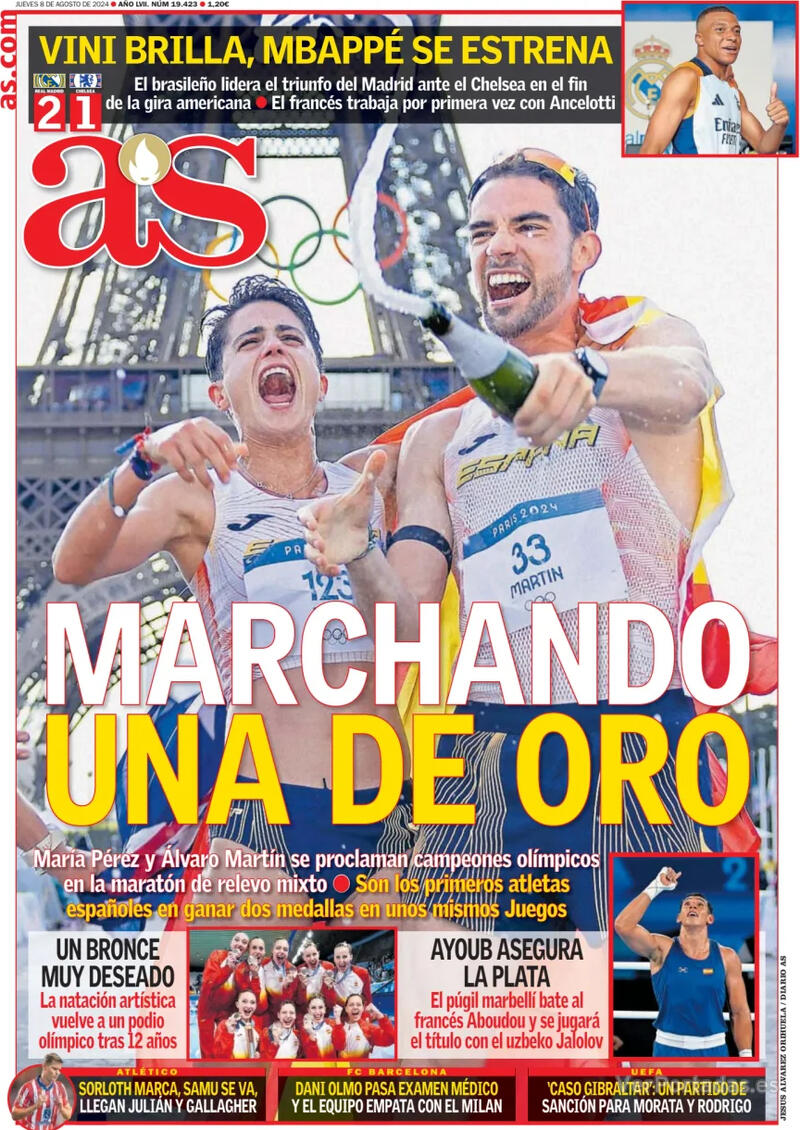
In a similar vein, the newspaper AS (August 8, 2024) highlighted on its front page the victory of María Pérez and Álvaro Martín in the mixed relay marathon. Notably, they became the first Spanish athletes to win two medals in the same Games, thereby effectively obscuring the gender of the female athlete.
4.4. Expressions that make gender visible when the communicative situation does not require making gender visible
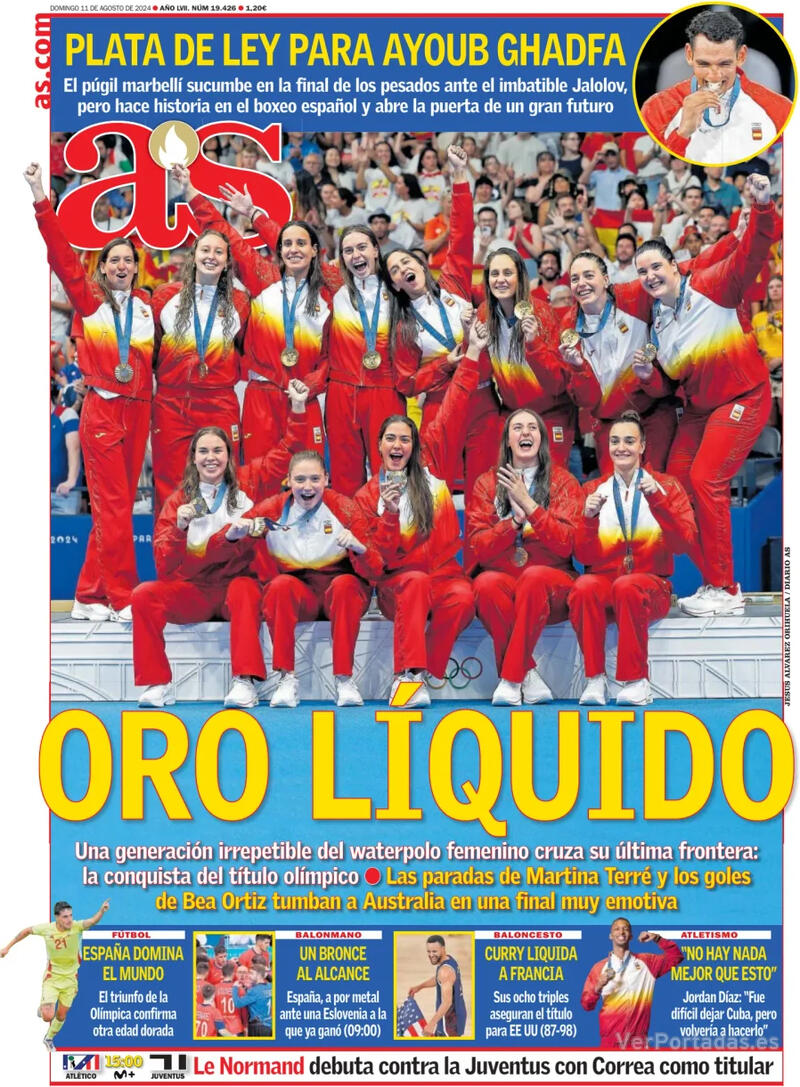
On the other hand, there are reports of front pages that highlight gender when it is not required by the communicative action. Such is the case of the publication on August 11, 2024, in which, following the victory of the women's water polo team that earned them the gold medal, the newspaper AS ran the following headline on its front page: Liquid gold. A generation of women's water polo crosses its final frontier: the conquest of the Olympic title, highlighting the gender of the athletes when it is not necessary.
Similarly, on its front page on August 8, 2024, following the gold medals won by María Pérez and Álvaro Martín, the newspaper Sport published the following headline: María Pérez and Álvaro Martín are crowned in Paris as masters of their sport, adding a historic gold medal in the debut of the mixed relay at the Games, instead of using a noun without specific gender connotations such as “leaders”.
5. CONCLUSIONS
The treatment of women's sport in the sports press in Spain during the Paris Olympic Games reveals a lesser presence of women's disciplines on the front pages of the main newspapers, which systematically relegate the victories of female athletes to the featured news or incorporate them in the summaries of each edition, reserving the main news for men's sport.
Regarding the language used, although there is a narrative that, in general terms, brings women's sport closer to a vision increasingly focused on the sporting aspect, stereotypical expressions that reinforce gender roles still persist, classifying the achievements of female athletes as "miraculous" or "historic", in contrast to the victories of male athletes, which are usually described as "great" or "heroic".
As a consequence of all the above, it can be stated that, despite the advances in gender equality, the analysis of the sports press reveals a persistent invisibility of the sport practiced by women.
In general, sports media continue to dedicate limited coverage to women's sports, a consequence of the predominantly male audience. And when they do cover them, they often employ expressions and descriptors that reproduce gender stereotypes and traditional roles. These linguistic patterns not only limit the representation of women in sports but also reinforce social perceptions that place women's sports in a position of lesser relevance and prestige compared to men's.
Thus, it is common to find terms and expressions in the sports press that highlight women's physical or emotional characteristics, often emphasizing aspects such as "beauty" or "delicacy", which have little to do with their sporting achievements. This type of coverage, in addition to diminishing the professionalism and effort these athletes represent, perpetuates a biased view of women's competition in which gendered narratives prevail over their merits.
Similarly, the use of non-inclusive language is manifested not only in the lack of visibility of female athletes, but also in the use of generic masculine terms to refer to mixed or mostly female groups.
Finally, it is essential that sports journalism professionals embrace their responsibility as agents of change in media discourse, adhering to journalistic writing guidelines and best practices on inclusive language and gender. The effective application of these resources not only contributes to a more equitable representation of women's sports, but also encourages social media outlets to act in favor of cultural change in the social perception of women's role in sports.
Therefore, in order to move towards a fair and equitable representation of sport, it is necessary for the sports press to adopt inclusive language that not only makes female athletes visible, but also moves away from gender stereotypes and promotes a comprehensive and respectful view of all people involved in the sporting field.
This study has some limitations that should be considered for future research. First, the analysis is limited to the exceptional period of the Olympic Games, when coverage of women's sports tends to increase compared to the rest of the sporting year, which may not represent the general trend of the media under analysis. Second, the categorization of expressions as perpetuating stereotypes lacks a graduated scale that would allow for distinguishing levels of impact, limiting the analysis to dichotomous categories. Furthermore, the study focuses exclusively on print media, while sports information consumption is also digital, especially among younger audiences. Finally, it should be noted that a historical analysis of previous series was not conducted to assess the evolution of sports journalism in past Olympic Games.
These limitations also give rise to future lines of research, such as a historical analysis that allows for a comparative evaluation of how this topic is addressed and its evolution over time. This analysis should also be extended to digital media and social networks, since this study is limited to print media. Finally, it would be interesting to have research that develops new models for evaluating inclusive language or measuring the degree of linguistic inclusivity.
6. REFERENCES
Antúnez, S. B. (2020). Los medios de comunicación, el periodismo y la representación de la violencia: reproducción y perpetuación. Quórum académico, 17(1), 9-37. https://www.redalyc.org/journal/1990/199062926006/html/
Aruguete, N. (2017). Agenda building. Revisión de la literatura sobre el proceso de construcción de la agenda mediática. Signo y Pensamiento, 36(70), 36-52. https://doi.org/10.11144/Javeriana.syp36-70.abrl
As (08 de agosto de 2024). Marchando una de oro. María Pérez y Álvaro Martín se proclaman campeones olímpicos en la maratón de relevo mixto. Son los primeros atletas españoles en ganar dos medallas en unos mismos Juegos. https://cdn.verportadas.es/covers/as/2024/portada-periodico-as-08-08-2024-7c4bf828.jpg
As (11 de agosto de 2024). Oro líquido. Una generación del waterpolo femenino cruza su última frontera: la conquista del título olímpico. https://cdn.verportadas.es/covers/as/2024/portada-periodico-as-11-08-2024-6482f79f.jpg
Asociación para la Investigación de Medios de Comunicación (2024). Estudio General de Medios (EGM). https://reporting.aimc.es/index.html#/main/diarios
Baum, M. A. y Potter, P. B. K. (2008). The relationships between mass media, public opinion, and foreign policy: Toward a theoretical synthesis. Annual Review of Political Science, 11, 39-65. https://doi.org/10.1146/annurev.polisci.11.060406.214132
Billings, A. C., Angelini, J. R. y MacArthur, P. J. (2014). Olympic television: Broadcasting the biggest show on Earth. Routledge.
Boyle, R. y Haynes, R. (2014). Sport, public broadcasting, and cultural citizenship: Signal lost? Routledge.
Bruce, T. (2009). Winning Space in Sport: The Olympics in the New Zealand Sports Media. In Markula, P. (Eds.), Olympic Women and the Media. Global Culture and Sport (pp 150-167). Palgrave Macmillan. https://doi.org/10.1057/9780230233942_8
Calvo-Ortega, E. C. (2020). Los encuadres noticiosos realizados sobre el deporte femenino. Estudio de caso: los Juegos Olímpicos de Río de Janeiro 2016. Comunicación y género, 3(2), 151-159. https://doi.org/10.5209/cgen.71015
Casajús, J. y Berdula, L. (2021). La enseñanza sexista de los deportes rugby y fútbol. Educación Física y Ciencia, 23(2), e170. https://dx.doi.org/https://doi.org/10.24215/23142561e170
Castleberry, A. y Nolen, A. (2018). Thematic analysis of qualitative research data: Is it as easy as it sounds? Currents in Pharmacy Teaching and Learning, 10(6), 807-815. https://doi.org/10.1016/j.cptl.2018.03.019
Comité Olímpico Internacional (06 de junio de 2024). IOC publishes updated Portrayal Guidelines to help ensure gender-equal, fair and inclusive media coverage of Paris 2024. https://lc.cx/F5gnyv
Comité Olímpico Internacional (08 de marzo de 2021). Tokio 2020, los primeros Juegos Olímpicos de la historia con paridad de género y con número récord de competidoras en los Juegos Paralímpicos. https://olympics.com/es/noticias/tokio-2020-paridad-genero-record-competidoras-paralimpicos
Cruz Vilain, M. A. (2021). Los Medios Masivos de Comunicación y su papel en la construcción y deconstrucción de identidades: apuntes críticos para una reflexión inconclusa. Bibliotecas. Anales de investigación, 8(9), 189-199. https://dialnet.unirioja.es/descarga/articulo/5704459.pdf
División de Estadística y Estudios de la Secretaría General Técnica y Consejo Superior de Deportes (2022). Encuesta de Hábitos Deportivos en España. 2022. Ministerio de Cultura y Deporte. https://lc.cx/9cFJbU
Donoso Pérez, B., Reina Giménez, A. y Álvarez-Sotomayor, A. (2023). Desigualdad de género en el deporte de competición: voces y reflexiones. Retos: Nuevas Perspectivas de Educación Física, Deporte y Recreación, 47, 557-564. https://doi.org/10.47197/retos.v47.93006
Fanjul Fernández, M. L. (2020). La creación de un ídolo deportivo mediático en la prensa especializada en España: Una comparativa de género. En M. T. Bejareno, V. Sánchez y S. Corral (Coords.), Género e igualdad como señas de identidad modernas (pp. 83-94). Tirant Lo Blanch.
Farfán, A. J. y Requena, G. (2024). Realidad de los medios de comunicación masivos en el desarrollo de la sociedad [Reality of mass media in the development of society]. INVESTUBA, 7(1), 61-72. https://revistasuba.com/index.php/INVESUBA/article/view/1086
Galván Cárdenas, Á. (2022). La infrarrepresentación de los medios de comunicación hacia el deporte femenino llega a las redes sociales. Estudio de casos en Instagram. Sociología del Deporte, 2(2). https://doi.org/10.46661/socioldeporte.6275
Gerardo, S. (2020). Estereotipos en los medios de comunicación, creadores de desigualdad. Memorias Del Concurso Lasallista De Investigación, Desarrollo E innovación, 6(1), 29-34. https://doi.org/10.26457/mclidi.v6i1.2037
Hutchins, B. y Rowe, D. (2016). Digital media sport: Technology, power and culture in the network society. Routledge.
de Jesus Bento, N. M., Rodrigues Xavier, N. y Sarat, M. (2020). Escola e infância: a transfobia rememorada. Cadernos pagu, 59, e205911. https://doi.org/10.1590/18094449202000590011
Jones, D. (2013). Online coverage of the 2008 Olympic Games on the ABC, BBC, CBC and TVNZ. Pacific Journalism Review, 19(1), 244-263. https://search.informit.org/doi/10.3316/informit.336942575276906
Lazo Serrano, L. I., Crespo Carreño, M. T., Gálvez Palomeque, K. E. y Pacheco Zerda, P. A. (2022). Patrones socioculturales sobre feminidad, comunicación mediática y violencia hacia mujeres, en provincia de El Oro. Sociedad & Tecnología, 5(2), 406-422. https://doi.org/10.51247/st.v5i2.223
MacQueen, K. M., McLellan, E., Kay, K. y Milstein, B. (1998). Codebook development for team-based qualitative analysis. Cam Journal, 10(2), 31-36. https://doi.org/10.1177/1525822X980100020301
Méndez Sánchez, M. del P., Peñaloza Gómez, R., García Méndez, M., Jaenes Sánchez, J. C. y Reynoso Sánchez, L. F. (2023). Percepción sobre la participación de la mujer en el deporte mexicano. Retos: nuevas tendencias en educación física, deporte y recreación, 48, 816-826. https://doi.org/10.47197/retos.v48.94474
Menéndez Menéndez, M. I. (2020). “You’re made of what you do”: impulso del deporte femenino a través de estrategias de femvertising en Nike. Retos: Nuevas Perspectivas de Educación Física, Deporte y Recreación, 38, 425-432. https://doi.org/10.47197/retos.v38i38.76959
Miles, M. B., Huberman, A. M. y Saldaña, J. (2014). Qualitative data analysis: A methods sourcebook (3ra ed.). Sage Publications.
Mujika-Alberdi, A., García-Arrizabalaga, I. y Gibaja-Martins, J. J. (2021). Mujeres deportistas: poca visibilidad y mucho estereotipo. Cuadernos de Psicología del Deporte, 21(3), 269-283. https://doi.org/10.6018/cpd.465201
Naciones Unidas (s.f.). Orientaciones para el empleo de un lenguaje inclusivo en cuanto al género en español. https://www.un.org/es/gender-inclusive-language/guidelines.shtml
Nowell, L. S., Norris, J. M., White, D. E. y Moules, N. J. (2017). Thematic analysis: Striving to meet the trustworthiness criteria. International Journal of Qualitative Methods, 16(1), 1-13. https://doi.org/10.1177/1609406917733847
ONU Mujeres (2024). Juegos Olímpicos de París 2024: una nueva era para las mujeres en el deporte. https://www.unwomen.org/es/juegos-olimpicos-de-paris-2024-una-nueva-era-para-las-mujeres-en-el-deporte
Pérez Serrano M. J. y García Santamaría J. V. (2018). Vocento o los límites de la prensa regional. Estudios sobre el Mensaje Periodístico, 24(1), 311-322. https://doi.org/10.5209/ESMP.59952
Pérez-Ugena, M. (2020). Aspectos regulatorios de la cuestión de género en el deporte. Estudios de Deusto, 68(2), 205-230. https://doi.org/10.18543/ed-68(2)-2020pp205-230
Pfister, G. (2015). Sportswomen in the German popular press: a study carried out in the context of the 2011 Women’s Football World Cup. Soccer & Society, 16(5-6), 639-656. https://doi.org/10.1080/14660970.2014.963314
Ramon Vegas, X., Gómez-Colell, E., Figueras-Maz, M. y Medina-Bravo, P. (2020). Las mujeres como outsiders en el periodismo deportivo: percepción de las estudiantes y personas expertas. Estudios sobre el mensaje periodístico, 26(3), 1183-1194. https://doi.org/10.5209/esmp.64526
Ribeiro, V., Barreda, D. H. y Montoto, L. L. (2024). Mujeres, estereotipos y representaciones en comunicación. Los roles de género en informativos de prime time de Cuba, Portugal y España. IROCAMM-International Review of Communication and Marketing Mix, 7(1), 42-64. https://doi.org/10.12795/IROCAMM.2024.v07.i01.03
Roca Marín, D. y Navarro García, E. M. (2022). Visibilidad del deporte femenino en la prensa deportiva digital española. Multidisciplinary Journal of Gender Studies, 11(3), 297-321. https://doi.org/10.17583/generos.7772
Rodríguez Torres, A. F., Sabando Casanova, Y. E. y Soasti Mejía, A. S. (2022). Desigualdad de género en la actividad física y deporte: Revisión sistemática. MENTOR Revista de Investigación Educativa y Deportiva, 1(3), 346-369. https://doi.org/10.56200/mried.v1i3.4762
Ross, K. y Padovani, C. (2020). Gender Equality and the Media: A Challenge for Europe. Routledge.
Saldaña, J. (2009). The coding manual for qualitative researchers. Sage Publications.
Salido-Fernández, J. y Muñoz-Muñoz, A. M. (2021). Media Representation of Women Athletes at the Olympic Games: A Systematic Review. Apunts Educación Física y Deportes, 146, 32-41. https://doi.org/10.5672/apunts.2014-0983.es.(2021/4).146.04
Sánchez Vigil, J. M., Olivera Zaldua, M. y Nebreda Martín, L. (2022). Análisis de portadas en revistas de información general durante la Segunda República. HUMAN REVIEW. International Humanities Review / Revista Internacional de Humanidades, 11. https://doi.org/10.37819/revhuman.v11i.1313
Sport (08 de agosto de 2024). La portada SPORT de hoy, jueves 08 de agosto de 2024. https://www.sport.es/es/noticias/portada-sport/portada-sport-hoy-jueves-08-106726957
Sport (27 de julio de 2024). La portada de SPORT de hoy, sábado 27 de julio de 2024. https://www.sport.es/es/noticias/portada-sport/portada-sport-hoy-sabado-27-106132207
Streem (22 de enero de 2025). For the second Olympics in a row, women lead in media coverage. Streem. Recuperado el 22 de enero de 2025 de https://streem.com.au
Suárez Ramírez, S., Balça, Â. y Costa, P. (2018). La enseñanza de los textos deportivos. Estudio de las portadas impresas de España y Portugal. Contextos Educativos. Revista de Educación, 22, 45-61. https://doi.org/10.18172/con.3335
Tovar Lasheras, A., Marta Lazo, C. y Ruiz del Olmo, F. J. (2020). De Marge a Lisa: El nuevo paradigma de la mujer en Los Simpson. Revista de Ciencias Sociales, 26(2), 28-42. https://doi.org/10.31876/rcs.v26i2.32420
UDaily (16 de agosto de 2016). Women athletes dominate NBC’s prime time coverage of Rio Olympics. https://news.ua.edu/https://www.udel.edu/udaily/2016/august/television-coverage-rio-olympics/
United Nations Educational, Scientific and Cultural Organization (1999). Guidelines for Gender-Inclusive Language in Media. https://unesdoc.unesco.org/ark:/48223/pf0000377299
Villa Gil, J. (2013). Medios masivos de comunicación, medios comunitarios y comunicación para el desarrollo. MEDIACIONES, 9(11), 84-89. https://doi.org/10.26620/uniminuto.mediaciones.9.11.2013.84-89
Weinberg, J. (16 de agosto de 2022). Publishing for Posterity: The Daily Front Page and the ILM. Cambridge Core blog. https://www.cambridge.org/core/blog/2022/08/16/publishing-for-posterity-the-daily-front-page-and-the-ilm/
AUTHORS' CONTRIBUTIONS, FUNDING AND ACKNOWLEDGMENTS
Authors' contributions:
Conceptualization: María Luisa Fanjul Fernández and Francisco José Pradana Pérez. Methodology: María Luisa Fanjul Fernández and Francisco José Pradana Pérez. Validation: María Luisa Fanjul Fernández and José Jesús Vargas Delgado. Formal Analysis: María Luisa Fanjul Fernández. Data Curation: María Luisa Fanjul Fernández and Francisco José Pradana Pérez. Original Drafting: María Luisa Fanjul Fernández and Francisco José Pradana Pérez. Drafting-Revision and Editing: María Luisa Fanjul Fernández, Francisco José Pradana Pérez, and José Jesús Vargas Delgado. Supervision: María Luisa Fanjul Fernández and José Jesús Vargas Delgado. Project Management: María Luisa Fanjul Fernández. All authors have read and accepted the published version of the manuscript: María Luisa Fanjul Fernández, Francisco José Pradana Pérez, and José Jesús Vargas Delgado.
Funding: This research did not receive external funding.
AUTHORS:
María Luisa Fanjul Fernández
European University of Madrid
Bachelor's degree in Political Science and Public Administration (UCM), MBA (Antonio de Nebrija University), University Expert in Tourism and Marketing (UNED), DEA in Tourism Policy (Antonio de Nebrija University and OMT) and Doctorate in Strategy and Marketing from the University of Castilla La Mancha. She is a vocational scholar with more than 22 years of experience in the academic world and more than 12 in communications. María Luisa is currently a leading researcher in the Communication, Society, and Organizations (IMPACTA) research group and a professor in the Marketing and Advertising degree programs and the Master's in Digital Entrepreneurship at the European University of Madrid.
marialuisa.fanjul@universidadeuropea.es
Orcid ID: https://orcid.org/0000-0003-0782-0549
Google Scholar: https://scholar.google.es/citations?user=_p-EEm8AAAAJ
Scopus: https://www.scopus.com/authid/detail.uri?authorId=57052793700
Francisco José Pradana Pérez
European University of Madrid
Graduate in Advertising Communication, Master's Degree in Communication Management (URJC) and Doctorate student in Communication (UVigo). Professor in the Department of Communication and Director of Postgraduate Studies at the European University of Madrid, where he runs the Master's Degree in E-Commerce Management and the Master's Degree in Product Management and Digital Strategy. His research interests focus on organizational communication and applied technology. He is part of the Communication, Society, and Organizations (IMPACTA) research group at the UEM's School of Economics, Business, and Communication.
franciscojose.pradana@universidadeuropea.es
Orcid ID: https://orcid.org/0000-0003-2323-1509
Google Scholar: https://scholar.google.es/citations?user=Nbv6-b4AAAAJ
Scopus: https://www.scopus.com/authid/detail.uri?authorId=59207346600
José Jesús Vargas Delgado
European University of Madrid
José Jesús Vargas Delgado
European University of Madrid
Professor of Advertising and Transpersonal Communication at the European University. Six-year research period. Accredited as a Full Professor by ANECA. Accredited Doctor in Persuasive Communication. Director of the Advertising degree program (2021-2022). Dean of the European University of the Canary Islands (2012-2014). Director of the Department of Advertising and Content at the European University (2002-2012). With 25 years of teaching experience at undergraduate and postgraduate level, he has taught multiple subjects related to the following areas: Creativity, Verbal and Nonverbal Communication, Public Speaking, Persuasive Communication, Transpersonal Communication, Emotional Intelligence, Strategy, Leadership, Management Skills, Mindfulness, Workplace Well-being, and Healthy Organizations. He has published more than 90 scientific articles and participated in more than 75 national and international scientific conferences. He has supervised six doctoral dissertations.
jjesus.vargas@universidadeuropea.es
Orcid ID: https://orcid.org/0000-0003-4109-611X
Google Scholar: https://scholar.google.es/citations?user=E8VTKlwAAAAJ
Scopus: https://www.scopus.com/authid/detail.uri?authorId=55772493600